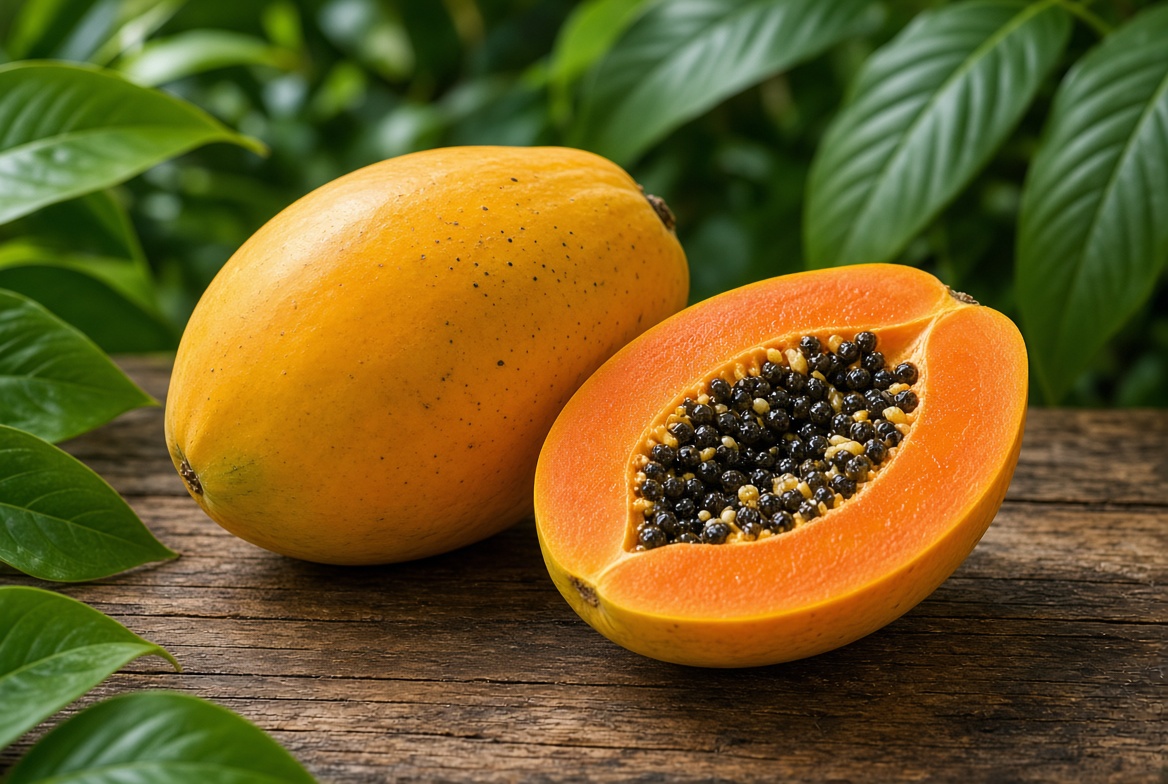
The Fascinating History of Pepaya
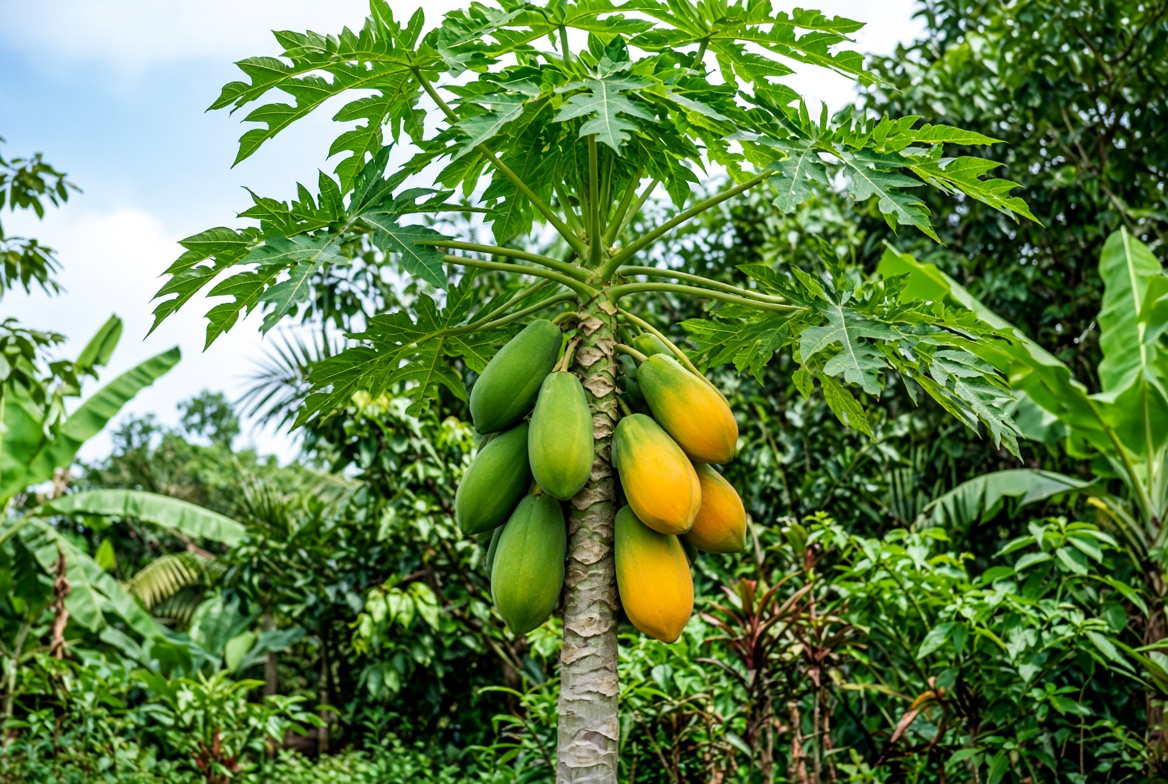
Papaya, known as pepaya in Indonesia and Malaysia, is a tropical fruit with roots stretching back thousands of years. Native to southern Mexico and Central America, it was cultivated by indigenous peoples including the Maya and Aztecs long before European contact.
Spanish and Portuguese explorers in the 16th century carried seeds across the globe, introducing the fruit to the Caribbean, Africa, Southeast Asia, and the Pacific. Christopher Columbus reportedly called it the “fruit of the angels.” Today, pepaya thrives in tropical climates worldwide, including Indonesia, where it is a beloved everyday fruit.
From Mesoamerica to Your Plate
Early naturalists noted its rapid spread. Indigenous communities used the fruit, leaves, and latex (rich in papain) for food and medicine – knowledge that modern science has validated. In Indonesia, pepaya is not only eaten ripe but also used green in salads and as a natural meat tenderizer.
Health Benefits of Pepaya
Papaya is a nutritional powerhouse. One cup (about 145g) of ripe papaya provides roughly 60-70 calories, high vitamin C (nearly 100% DV), significant vitamin A from beta-carotene, fiber, folate, and potassium – all while being low in fat.
Watch: Health Benefits of Papaya
Supports Digestion
Contains the enzyme papain, which helps break down proteins. Ideal for easing bloating, indigestion, and supporting gut health. Green papaya has higher papain levels.
Boosts Immunity
Exceptionally high in vitamin C, which supports immune function and acts as a powerful antioxidant.
Promotes Eye Health
Rich in beta-carotene and other carotenoids (lycopene, lutein) that convert to vitamin A, supporting vision and reducing risk of macular degeneration.
Heart & Skin Health
Antioxidants, fiber, and potassium help manage cholesterol and blood pressure. Vitamins C and A support collagen production for glowing skin.
Note: While papaya is generally safe, unripe fruit and seeds in large amounts may have stronger effects. Consult a doctor if pregnant or on medication.
Delicious Pepaya Recipes
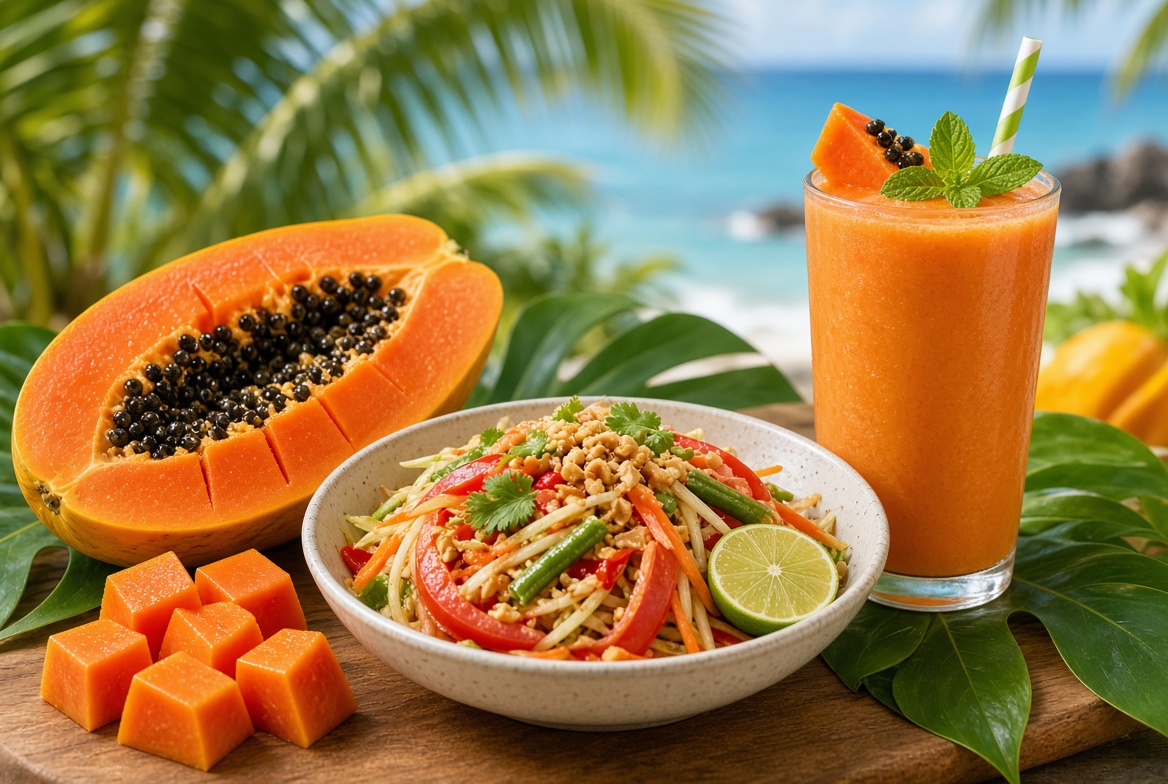
Watch: Easy Papaya Recipes
1. Classic Fresh Pepaya with Lime
The simplest and most popular way. Halve a ripe papaya, scoop out the black seeds (they’re edible and peppery!), and squeeze fresh lime over the orange flesh. Perfect for breakfast.
2. Indonesian-Style Green Pepaya Salad
Shred green (unripe) pepaya. Mix with lime juice, fish sauce or soy, chili, garlic, peanuts, and tomatoes. Refreshing and spicy.
3. Tropical Pepaya Smoothie
Blend 1 cup ripe papaya, banana, yogurt or coconut milk, a squeeze of lime, and ice. Optional: ginger or mint.
4. Pepaya Seeds as Spice
Dry and grind the black seeds – they taste like black pepper with a slight bitterness. Use as a natural seasoning.
Bonus: Natural Meat Tenderizer
Wrap meat in papaya leaves or rub with green papaya paste. The papain enzyme tenderizes proteins beautifully.
How to Grow Pepaya at Home
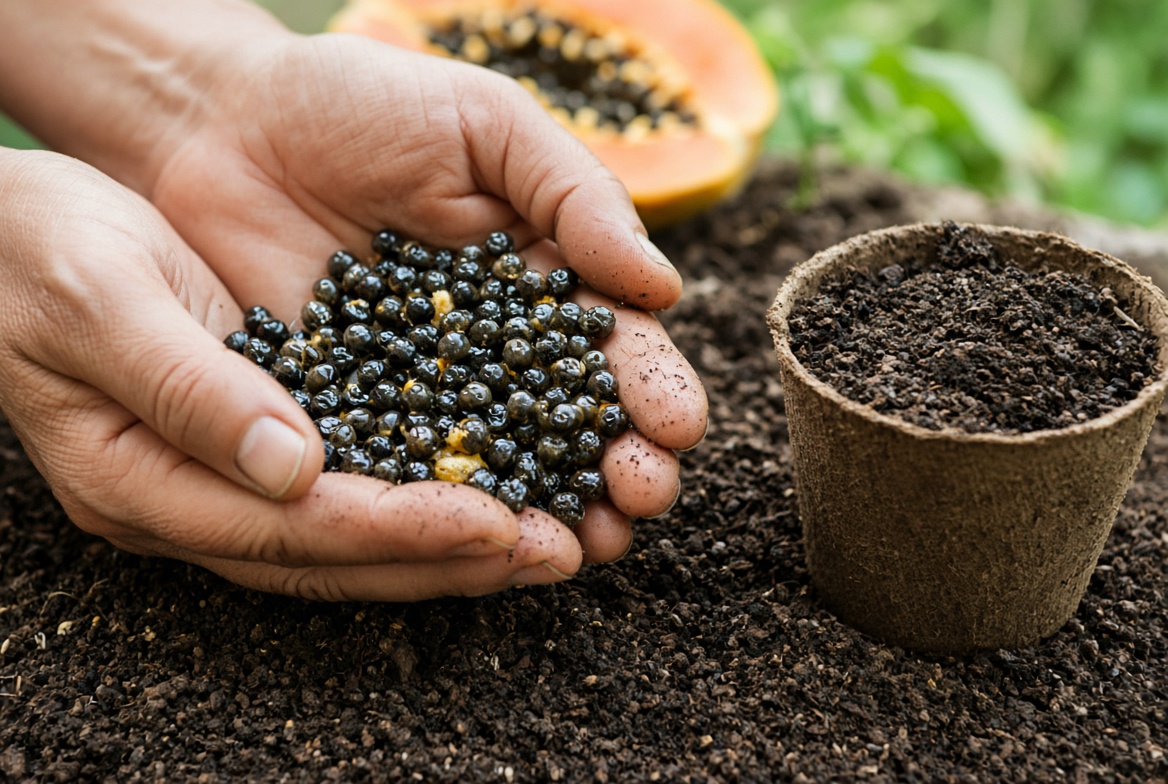
Watch: How to Grow Papaya from Seed
Papaya is one of the easiest tropical fruits to grow from seed. In warm climates (USDA zones 9-12, or tropical Indonesia), it can fruit within 6-12 months.
Step-by-Step Growing Guide
- Climate & Soil: Needs full sun, temperatures 21–33°C (70–91°F), well-drained loamy soil, pH 6.0–6.5. Avoid waterlogging – root rot is the biggest enemy.
- Seeds: Scoop seeds from a ripe fruit, rinse, and dry for 1-2 days. Or buy quality seeds (California, Solo, or local Indonesian varieties like Calina are popular).
- Planting: Sow 1-2 cm deep in pots or directly in the ground. Plant 3-5 seeds per spot and thin to the strongest female or hermaphrodite plant (sex is visible at flowering).
- Spacing: 2–3 meters apart. Trees grow 3–10 meters tall with a single trunk.
- Care: Water regularly but not excessively. Fertilize with compost and balanced NPK every 1-2 months. Protect from strong winds and frost.
- Harvest: Fruits turn yellow-orange and soften slightly. Pick when color starts changing for better shipping or let ripen fully on the tree for peak sweetness.
In containers: Use large pots (at least 40-50L) and move indoors during cold weather. With good care, a home papaya tree can provide fruit for years.
Frequently Asked Questions
Is pepaya the same as papaya?
Yes. Pepaya is the Indonesian and Malay name for the fruit known globally as papaya (Carica papaya).
Can you eat papaya seeds?
Yes. They are edible, peppery, and traditionally used as a vermifuge or spice. Start with small amounts.
How long does it take for a papaya tree to fruit?
Typically 6 to 12 months from seed under ideal tropical conditions.